
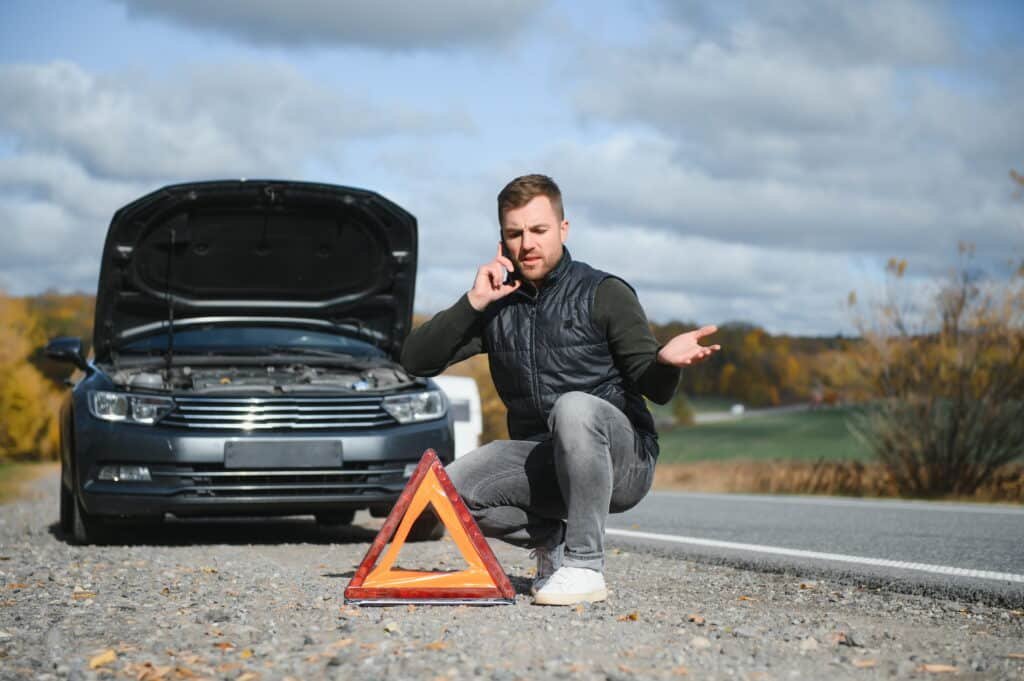
A roadside breakdown can happen without warning—on a highway, in city traffic, or even on a quiet road close to home. Whether it’s a flat tire, engine failure, overheating, or a dead battery, the situation can quickly become stressful and potentially dangerous if handled incorrectly.
What you do in the first few minutes matters the most. The right actions can protect your safety, prevent further vehicle damage, and help you get assistance quickly without unnecessary risk.
This step-by-step guide explains exactly what to do immediately after a roadside breakdown so you stay safe and make the situation manageable until help arrives.
Step 1: Stay Calm and Assess the Situation
The first reaction to a breakdown is often panic, especially if the car stops in traffic or on a highway. However, staying calm is critical.
Take a moment to assess:
- Is the vehicle still moving or completely stopped?
- Are you in a safe location or exposed to traffic?
- Is there smoke, fire, or a fuel smell?
- Can you safely control the vehicle?
Avoid sudden movements or quick decisions. A calm response helps you think clearly and act safely.
Step 2: Turn On Your Hazard Lights Immediately
Your hazard lights are your first line of communication with other drivers.
They:
- Alert vehicles behind you that something is wrong
- Reduce the risk of rear-end collisions
- Signal that your car is not moving normally
Turn them on immediately—even before you fully bring the car to a stop if possible.
If it is nighttime or visibility is poor, hazards become even more important.
Step 3: Move Your Vehicle to a Safe Location (If Possible)
If your car still has partial control, try to move it out of active traffic.
Safe locations include:
- Roadside shoulder
- Emergency stopping lane (highways)
- Parking lot or side street
- Well-lit area away from moving traffic
If you cannot move the car:
Stay inside with your seatbelt on and wait for help unless the situation becomes dangerous (fire, smoke, or risk of collision).
Never attempt risky maneuvers in heavy traffic.
Step 4: Turn Off the Engine
Once safely stopped, turn off the engine to:
- Prevent further damage
- Reduce fire risk
- Stop overheating or mechanical strain
If you notice smoke, burning smells, or fluid leaks, shutting off the engine immediately is especially important.
Step 5: Stay Inside the Vehicle When on Busy Roads
One of the most important safety rules: do not stand outside your car on highways or busy roads unless absolutely necessary.
Remaining inside is safer because:
- Passing vehicles may not see you
- High-speed traffic increases accident risk
- It keeps you protected until help arrives
Keep your seatbelt on and remain alert.
Step 6: Use Warning Devices if Available
If you carry emergency warning tools, use them carefully.
Examples:
- Reflective triangles
- Road flares
- Safety cones
Place them at a safe distance behind your car (only if it is safe to exit the vehicle). This gives oncoming traffic additional warning.
Step 7: Identify the Problem (Only If It Is Safe)
You can try to quickly understand what went wrong—but only if it is safe to do so.
Common issues you might notice:
- Flat or damaged tire
- Overheating (steam from hood)
- Battery issue (no electrical response)
- Smoke or unusual smell
- Fuel-related problem
Important:
Do NOT attempt repairs on busy roads or highways unless you are fully safe and knowledgeable.
Step 8: Call Roadside Assistance or a Towing Service
Once you are safe, the next step is to get professional help.
When calling a towing service, provide:
- Exact location (use Google Maps if possible)
- Type of problem (flat tire, breakdown, accident)
- Vehicle condition
- Whether you are in a safe spot
Clear communication helps the towing team respond faster and with the right equipment.
If you’re unsure who to call, prioritize a reliable emergency towing service in your area.
Step 9: Inform Someone You Trust
Let a family member or friend know:
- Where you are
- What happened
- That help is on the way
This adds an extra layer of safety, especially if you are stranded alone or at night.
Step 10: Stay Visible and Safe While Waiting
While waiting for help, focus on staying safe and visible.
Do:
- Keep hazard lights on
- Stay inside the vehicle (on highways)
- Lock your doors
- Keep your phone charged
Avoid:
- Accepting help from strangers on isolated roads
- Standing too close to traffic
- Attempting risky repairs
If someone stops to help, only interact if you feel safe and ideally wait for verified roadside assistance.
Step 11: Prepare Your Documents and Information
Before the tow truck arrives, keep important information ready:
- Driving license
- Vehicle registration
- Insurance details
- Breakdown description
This helps speed up the process once assistance arrives.
Step 12: Follow Instructions from the Tow Operator
When the towing service arrives:
- Explain the issue clearly
- Follow their safety instructions
- Let professionals handle the loading and transport
- Ask where your vehicle will be taken
A trained operator ensures your vehicle is moved without additional damage.
Common Mistakes to Avoid During a Breakdown
Many drivers unintentionally make the situation worse. Avoid these mistakes:
1. Standing on the road
This is extremely dangerous, especially on highways.
2. Trying complex repairs
Without tools or experience, you risk injury or further damage.
3. Ignoring traffic safety
Always prioritize visibility and caution over speed of action.
4. Leaving the vehicle in unsafe conditions
If the car is exposed to traffic, do not leave it unattended unless necessary.
5. Accepting unsafe assistance
Only trust verified roadside or towing professionals.
Special Situations and What to Do
If your car breaks down on a highway:
- Move to the shoulder immediately
- Stay inside the vehicle
- Keep hazard lights on continuously
- Call emergency towing services
If your car breaks down at night:
- Increase visibility using lights and reflectors
- Stay inside with doors locked
- Avoid interacting with strangers
If you are in a remote area:
- Share location via GPS
- Stay with the vehicle
- Wait for professional help
How Proper Response Reduces Risk
Handling a breakdown correctly:
- Prevents accidents
- Reduces exposure to traffic danger
- Protects you and your passengers
- Minimizes stress
- Speeds up rescue and towing response
Most roadside emergencies become dangerous not because of the breakdown itself, but because of improper reaction afterward.
Final Thoughts
A roadside breakdown is never convenient, but it doesn’t have to be dangerous or overwhelming. The key is knowing exactly what to do in the first few minutes.
By turning on hazard lights, moving to safety, staying inside the vehicle when appropriate, and calling professional towing assistance, you significantly reduce risk and ensure a smooth recovery process.
Preparation, awareness, and calm decision-making are your strongest tools during any roadside emergency.
If you follow these steps, you’ll not only protect yourself and your passengers but also make the entire towing and recovery process faster and safer.