
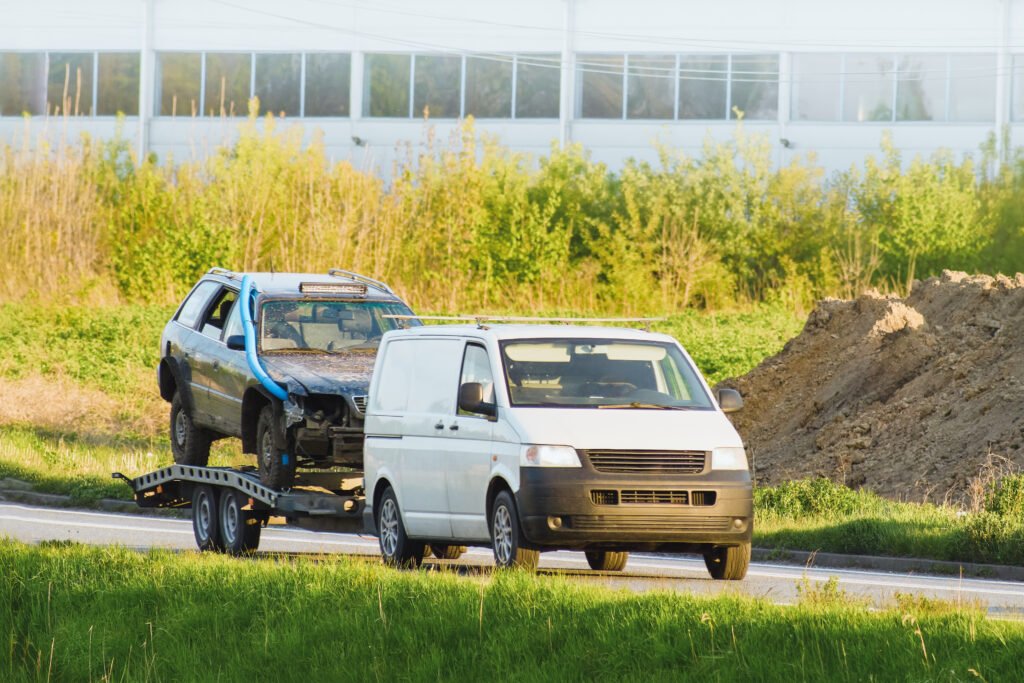
When most people think about towing, they simply picture a tow truck arriving to transport a disabled vehicle. However, not all towing methods are the same. The type of towing used can directly affect your vehicle’s safety, condition, and potential repair costs.
Two of the most common towing methods are flatbed towing and wheel-lift towing. While both are widely used in the towing industry, each serves different purposes and works best for certain situations.
If your car breaks down, is involved in an accident, or needs transportation, understanding the difference between these towing methods can help you make the right decision for your vehicle.
In this guide, we’ll explain how flatbed towing and wheel-lift towing work, their advantages and disadvantages, and which option is generally safer for different vehicle types.
What Is Flatbed Towing?
Flatbed towing uses a truck equipped with a long hydraulic platform that tilts downward to ground level. The disabled vehicle is either driven or winched onto the flat platform, where all four wheels remain completely off the ground during transport.
Once secured, the platform lifts back into place and safely carries the vehicle to its destination.
Flatbed towing is widely considered one of the safest towing methods available because the vehicle avoids direct road contact during transport.
What Is Wheel-Lift Towing?
Wheel-lift towing uses a metal yoke that lifts either the front or rear wheels of the vehicle off the ground while the remaining two wheels stay on the road during transport.
This method evolved from older hook-and-chain towing systems and is commonly used for:
- Short-distance towing
- Parking enforcement
- Repossessions
- Smaller vehicles
- Quick roadside recoveries
Wheel-lift towing is generally faster and more compact than flatbed towing, making it useful in tight spaces and urban environments.
How Flatbed Towing Works
The process for flatbed towing typically includes:
- Lowering the hydraulic bed
- Aligning the vehicle with the platform
- Winching or driving the vehicle onto the bed
- Securing the vehicle using straps and tie-downs
- Raising the platform for transport
Because the vehicle rests entirely on the platform, it experiences minimal movement and no tire wear during transport.
This makes flatbed towing especially valuable for vehicles requiring extra protection.
How Wheel-Lift Towing Works
With wheel-lift towing:
- The tow truck positions behind or in front of the disabled vehicle
- A hydraulic yoke slides beneath two wheels
- The wheels are lifted off the ground
- The remaining wheels roll along the roadway during towing
This method is often quicker than flatbed towing and works well for short-distance transport under the right conditions.
However, it may not be ideal for every vehicle type.
Why the Towing Method Matters
Many drivers assume all towing methods are equally safe, but improper towing can actually cause serious damage.
Incorrect towing may affect:
- Transmission systems
- Suspension components
- Tires
- Drivetrain systems
- Body panels
- Bumpers
- Alignment
Modern vehicles are more technologically advanced than ever, which means towing requires specialized knowledge and equipment.
Choosing the correct towing method helps protect your investment and reduce the risk of additional repair costs.
Benefits of Flatbed Towing
Flatbed towing offers several major advantages, especially for newer or more valuable vehicles.
1. Maximum Vehicle Protection
The biggest benefit of flatbed towing is protection.
Because all four wheels are lifted off the road:
- Tire wear is eliminated
- Drivetrain stress is avoided
- Suspension movement is reduced
- Transmission damage risks decrease
This makes flatbed towing ideal for long-distance transport and delicate vehicles.
2. Safer for All-Wheel Drive Vehicles
All-wheel-drive (AWD) and four-wheel-drive (4WD) vehicles often require flatbed towing.
Why?
Because towing these vehicles with two wheels on the ground can damage drivetrain components and transfer cases.
Many manufacturers specifically recommend flatbed towing for AWD vehicles to prevent expensive mechanical damage.
3. Better for Luxury and Sports Cars
Luxury vehicles and low-clearance sports cars require extra care during towing.
Flatbed towing helps protect:
- Custom paint
- Low front bumpers
- Specialty suspension systems
- Performance tires
- Undercarriage components
Owners of high-end vehicles often prefer flatbed towing because it minimizes transport risks.
4. Reduced Risk After Accidents
Vehicles involved in accidents may have:
- Damaged wheels
- Bent suspension
- Leaking fluids
- Structural instability
Flatbed towing allows accident-damaged vehicles to remain fully supported during transport.
This reduces the chance of worsening existing damage.
5. Ideal for Long-Distance Transport
Because the vehicle remains stationary on the platform, flatbed towing is excellent for long-distance transportation.
It reduces:
- Tire wear
- Road vibration
- Mechanical strain
For classic cars, collector vehicles, or cross-state transport, flatbed towing is often the preferred option.
Disadvantages of Flatbed Towing
Although flatbed towing is extremely safe, there are some limitations.
Higher Cost
Flatbed towing may cost slightly more because of:
- Specialized equipment
- Larger trucks
- Longer loading times
However, many drivers consider the added protection worth the investment.
Larger Vehicle Size
Flatbed tow trucks require more space for loading and maneuvering.
This can make them slightly less practical in:
- Tight parking garages
- Narrow streets
- Congested urban areas
Benefits of Wheel-Lift Towing
Wheel-lift towing also offers important advantages in certain situations.
1. Faster Loading
Wheel-lift towing is often quicker than flatbed towing.
The operator can rapidly secure and lift the vehicle without loading it onto a platform.
This makes it useful for:
- Busy roadways
- Quick roadside removals
- Parking enforcement situations
2. Easier in Tight Spaces
Wheel-lift trucks are generally more compact and maneuverable.
This allows operators to access:
- Parking garages
- Apartment complexes
- Tight driveways
- Congested streets
In crowded areas, wheel-lift towing may be the only practical option.
3. Cost-Effective for Short Distances
For short-distance towing of standard front-wheel-drive vehicles, wheel-lift towing can be a cost-effective solution.
Many routine roadside towing situations can be safely handled using wheel-lift equipment when performed correctly.
Disadvantages of Wheel-Lift Towing
Despite its convenience, wheel-lift towing carries some limitations.
Increased Drivetrain Stress
Because two wheels remain on the road, wheel-lift towing may place stress on:
- Transmissions
- Drivetrains
- Differentials
This is especially risky for AWD and 4WD vehicles.
Potential Tire Wear
The tires remaining on the road continue rotating during towing.
For long-distance transport, this may contribute to:
- Uneven tire wear
- Suspension stress
- Additional mileage
Less Ideal for Damaged Vehicles
Vehicles with:
- Broken axles
- Severe accident damage
- Suspension problems
- Steering damage
may not tow safely using wheel-lift systems.
Flatbed towing is usually safer for heavily damaged vehicles.
Which Vehicles Should Use Flatbed Towing?
Flatbed towing is generally recommended for:
- Luxury vehicles
- Sports cars
- AWD vehicles
- 4WD vehicles
- Electric vehicles
- Motorcycles
- Classic cars
- Lowered vehicles
- Accident-damaged vehicles
These vehicles often require maximum protection during transport.
Which Vehicles Can Use Wheel-Lift Towing?
Wheel-lift towing may work well for:
- Standard sedans
- Front-wheel-drive cars
- Small SUVs
- Short-distance towing needs
- Quick roadside recovery situations
However, the towing operator must still evaluate the vehicle carefully before transport.
Is Flatbed Towing Always Better?
While flatbed towing is often considered the safest option overall, wheel-lift towing still serves an important role in the towing industry.
The best towing method depends on:
- Vehicle type
- Distance
- Vehicle condition
- Road conditions
- Clearance issues
- Budget
- Location accessibility
Professional towing companies evaluate these factors before determining the safest transport method.
Why Professional Towing Matters
Improper towing can cause expensive damage very quickly.
Professional towing operators understand:
- Weight distribution
- Secure tie-down procedures
- Vehicle-specific towing requirements
- Safe loading angles
- Manufacturer towing guidelines
Experienced operators also carry proper insurance and use professional-grade equipment designed for safe vehicle transport.
Choosing a reputable towing company reduces risks and ensures your vehicle receives proper care.
Common Situations That Require Professional Towing
Drivers may need towing services for many reasons, including:
- Engine failure
- Flat tires
- Dead batteries
- Accident recovery
- Overheating
- Transmission problems
- Fuel delivery situations
- Vehicle transport
During stressful roadside emergencies, having a trusted towing provider can make a major difference.
Questions to Ask Before Your Vehicle Is Towed
If possible, ask the towing company:
- What towing method will be used?
- Is flatbed towing available?
- Is the driver licensed and insured?
- Can they tow AWD or luxury vehicles safely?
- How far will the vehicle be transported?
- Are there additional fees?
Good towing companies are transparent and prioritize vehicle safety.
How to Reduce the Risk of Towing Damage
Drivers can help protect their vehicles during towing by:
- Removing valuables
- Taking vehicle photos beforehand
- Informing operators about vehicle modifications
- Mentioning drivetrain type
- Asking questions about towing procedures
Communication helps ensure the safest possible towing experience.
Why Local Towing Companies Are Valuable
Local towing companies often provide faster response times and better knowledge of local roads and conditions.
Experienced local operators understand:
- Traffic patterns
- Accident-prone areas
- Safe loading zones
- Local repair shops
- Rural road conditions
This experience helps improve both safety and efficiency during roadside emergencies.
Final Thoughts
Both flatbed towing and wheel-lift towing play important roles in the towing industry, but the safest option depends on your specific vehicle and situation.
In general:
- Flatbed towing offers maximum protection and is ideal for luxury, AWD, sports, and damaged vehicles.
- Wheel-lift towing provides faster, cost-effective service for certain short-distance towing situations.
The most important factor is working with a professional towing company that understands how to safely handle your vehicle.
Whether you experience a breakdown, accident, or roadside emergency, choosing the correct towing method can help prevent additional damage, reduce stress, and ensure your vehicle arrives safely at its destination.
When vehicle safety matters, professional towing expertise makes all the difference.