
When your car suddenly stops working on the road, the situation can feel overwhelming. The first question most drivers ask is: “Do I need a tow, or can this be fixed here?” The answer depends on what actually went wrong.
Not every roadside problem requires the same type of help. A flat tire might only need a quick roadside repair, while an accident could require specialized recovery towing. A dead battery might not even need towing at all.
Understanding which towing service fits your situation can save you time, money, and stress—and more importantly, it can keep you safe on the road.
This guide breaks down the three most common roadside emergencies—flat tires, dead batteries, and accidents—and explains exactly what type of towing or roadside assistance you actually need in each case.
Why Choosing the Right Towing Service Matters
Many drivers assume all towing services are the same, but that’s not true. Different situations require different equipment and expertise.
Choosing the wrong service can lead to:
- Longer waiting times
- Higher costs
- Additional vehicle damage
- Unnecessary towing when roadside repair is enough
Modern roadside assistance is designed to solve problems efficiently on the spot whenever possible. The goal is not always to tow your vehicle—but to get you moving again safely.
Let’s break down each situation.
1. Flat Tire: Do You Really Need a Tow?
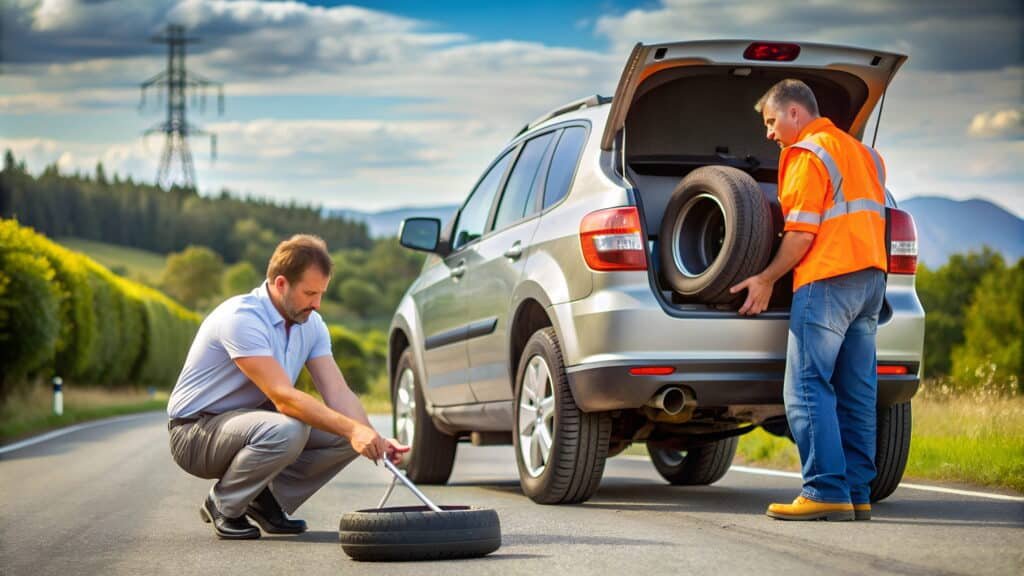
A flat tire is one of the most common roadside problems, and in many cases, you do NOT need a tow truck.
What usually causes a flat tire:
- Nails, glass, or sharp objects
- Potholes or road impact
- Worn-out tread
- Slow leaks due to valve or rim damage
- Underinflation or overinflation
Warning signs:
- Car pulling to one side
- Thumping sound while driving
- Sudden loss of control
- Visible deflation
Best Service for a Flat Tire
Roadside Assistance (First Choice)
In most cases, a technician can fix the issue on the spot by:
- Replacing the tire with a spare
- Repairing minor punctures
- Inflating a low tire
- Checking tire condition
This is the fastest and cheapest solution.
When You DO Need a Tow for a Flat Tire
You may need towing if:
- You don’t have a spare tire
- The spare is also damaged
- Multiple tires are damaged
- Wheel rim is bent or broken
- You are in an unsafe location (highway, heavy traffic)
In these cases, a flatbed tow truck is usually recommended to prevent further damage.
Flat Tire Summary
- Minor puncture → Roadside repair service
- No spare tire → Tow truck required
- Severe wheel damage → Flatbed towing
2. Dead Battery: Tow or No Tow?
A dead battery can feel like a major issue, but it’s often the easiest roadside problem to fix.
Common causes:
- Leaving headlights or interior lights on
- Old battery (2–5 years lifespan)
- Extreme weather conditions
- Alternator issues
- Corroded terminals
Warning signs:
- Engine won’t start
- Clicking sound when turning key
- Dim dashboard lights
- Electrical systems not working
Best Service for a Dead Battery
Roadside Jump Start (First Choice)
Most of the time, you do NOT need towing.
A roadside technician can:
- Jump-start your battery
- Test battery health
- Replace battery on-site (in some cases)
This gets you back on the road quickly.
When You DO Need a Tow for a Dead Battery
Towing may be necessary if:
- Battery keeps dying repeatedly
- Alternator is faulty
- Electrical system failure
- Vehicle still won’t start after jump-start
- You are stranded in a dangerous area
In these cases, a tow truck can take your vehicle to a repair shop for full diagnosis.
Dead Battery Summary
- Simple battery drain → Jump start service
- Battery failure → Replacement or towing
- Electrical system issue → Tow to workshop
3. Car Accident: When Towing Becomes Necessary
Accidents are the most serious roadside situations and almost always require professional towing.
Even minor collisions can damage critical components that are not visible immediately.
Common accident scenarios:
- Rear-end collision
- Side impact
- Front-end crash
- Multi-vehicle accidents
- Off-road incidents
Why Towing Is Required After an Accident
After a crash, your vehicle may have:
- Frame damage
- Broken axle or suspension
- Fluid leaks
- Airbag deployment
- Engine or transmission damage
- Steering failure
Driving in this condition can be extremely unsafe.
Best Service for an Accident
Flatbed Towing (Recommended)
For most accidents, a flatbed tow truck is the safest option because:
- It keeps all wheels off the ground
- Prevents further mechanical damage
- Allows stable transport of damaged vehicles
Recovery Towing (Severe Cases)
If the vehicle is:
- Stuck in a ditch
- Rolled over
- Off-road or in water
- Heavily damaged
Then recovery towing equipment is required, often involving winches or cranes.
When You Should NOT Drive After an Accident
Do not attempt to drive if:
- Steering feels loose or unresponsive
- Brakes are damaged
- Fluid is leaking
- Tires are damaged or missing
- Dashboard shows critical warnings
Even if the car “seems fine,” hidden damage can make driving dangerous.
Accident Summary
- Minor damage but drivable → Flatbed tow recommended
- Undrivable vehicle → Immediate towing required
- Severe crash or off-road → Recovery towing
Other Common Roadside Situations and What You Need
While flat tires, batteries, and accidents are the most common, here are a few other scenarios:
Engine Overheating
- Best service: Roadside cooling assistance (if minor)
- Tow needed: Yes, if engine shuts down or steam appears
Fuel Issues (Empty Tank or Contamination)
- Best service: Fuel delivery
- Tow needed: Rare, only if system is damaged
Transmission Failure
- Best service: Tow to repair shop
- Tow type: Flatbed recommended
Brake Failure
- Best service: Emergency towing only
- Tow type: Flatbed or recovery depending on situation
How to Decide Quickly: Simple Rule
If you’re stuck and unsure, use this simple decision guide:
You likely need ROADSIDE ASSISTANCE if:
- Car won’t start but shows no major damage
- Flat tire with spare available
- Battery issue
- Out of fuel
You likely need a TOW TRUCK if:
- Car cannot move safely
- Accident occurred
- Mechanical failure while driving
- Steering or brakes are compromised
Safety Tips While Waiting for Help
No matter the situation:
- Turn on hazard lights
- Move to a safe location if possible
- Stay inside the vehicle on highways
- Keep doors locked
- Share your location with someone
- Avoid accepting help from strangers in unsafe areas
Why Professional Towing Services Matter
A professional towing service does more than move your vehicle. It ensures:
- Safe handling of damaged cars
- Prevention of further mechanical damage
- Quick roadside response
- Proper equipment for each situation
Using the right service reduces stress and gets you back on track faster.
Final Thoughts
Not every roadside emergency requires a tow truck, but knowing when you actually need one is crucial. A flat tire often needs simple roadside assistance, a dead battery usually requires a jump start, and accidents almost always require professional towing—especially flatbed or recovery towing.
The key is to quickly identify the problem and choose the right service. This not only saves time and money but also ensures your safety and protects your vehicle from further damage.
When in doubt, prioritize safety first and call a professional towing service to assess the situation properly.